

Supply disruptions coupled with peak demand season push domestic sulfur prices above the 6,000 yuan mark
Release time:2026-04-03
Page views:0
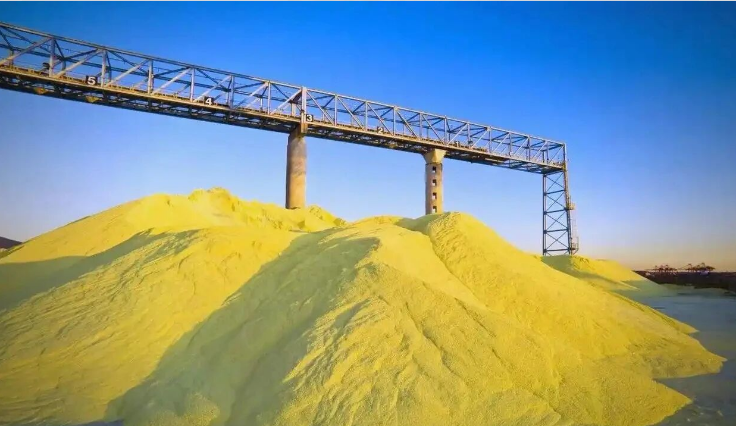
Since the end of March 2026, the domestic sulfur spot market has seen a strong rebound. On April 2, the reference price of granular sulfur at Zhenjiang Port rebounded to 6,200 yuan/ton, an increase of 620 yuan/ton from the previous Thursday, representing a 11.11% increase. The interplay between market supply and demand expectations and geopolitical variables has jointly contributed to the recent strong upward trend in the domestic sulfur market.
1. Price trend: reaching a record high
On March 30th, the domestic sulfur (granular) price surpassed the 6,000 yuan/ton mark, hitting a record high. The base price for sulfur sales bidding in Dalian was set at 6,210 yuan/ton, marking a significant increase of 600 yuan/ton from the previous bidding base price, and setting a new historical record for the domestic sulfur bidding base price since 2008. The sulfur price in Zhenjiang Port was reported at 6,100 yuan/ton, up 1,750 yuan from the beginning of the month, representing an increase of over 48%. Meanwhile, international sulfur futures prices soared to historical highs above 6,000 yuan/ton, with both domestic and international markets strengthening in tandem.
II. Supply-side shock: Geopolitical conflicts block import channels
The US-Israel military strike against Iran, which erupted at the end of February 2026, directly altered this supply pattern. Due to the ongoing geopolitical tensions in the Strait of Hormuz, Iranian refineries have ceased production and ports have halted loading, resulting in virtually zero sulfur exports to China. According to market statistics, the expected arrival of sulfur at ports in China in March is expected to plummet by more than 50% year-on-year, and the significant gap at the import end continues to widen, with effective alternative channels for replenishing stocks being difficult to find in the short term.
Nearly half of the global sulfur exports pass through the Strait of Hormuz, and the de facto closure of the strait has resulted in most sulfur cargoes from the region being stranded, with the recovery time for delivery remaining unclear. Meanwhile, the impact of the Russia-Ukraine conflict on Russia's sulfur supply continues, with Russia losing about 1 million tons of sulfur supply in the fourth quarter of 2025, and it is expected to remain difficult to recover until the first half of 2026. The dual supply shocks have combined to create an extremely tight situation in domestic sulfur spot market supply.
In the price transmission chain, exporters in the Middle East have significantly increased their prices. Qatar Energy Company raised its April sulfur FOB price to $570/ton, an increase of $50/ton from the previous month, marking the highest level since Argus began recording this price in 2013. Based on current freight and insurance costs, the estimated comprehensive CIF cost has reached $646 to $652/ton.
Domestic port inventories have fallen to a five-year low. As of March 26, sulfur inventories in domestic ports had dropped to 1.5544 million tons, which can only support about 1.2 months. As of April 2, the national port inventories stood at 1.5667 million tons, still at a relatively low level.
III. Demand-side support: peak season of spring plowing coupled with emerging demand
The demand side also provides strong support for price increases. Currently, it is the critical window period for domestic fertilizer use for spring plowing, and the rigid demand for phosphate fertilizer has been intensively released. The operating rate of downstream phosphorus chemical enterprises continues to maintain at a high level of 75% to 80%, and the rigid procurement demand for sulfur remains high. In 2026, the domestic monoammonium phosphate, diammonium phosphate, and other industries plan to add new plants, which is expected to increase sulfur consumption by approximately 3.29 million tons.
Meanwhile, the incremental demand in the new energy sector is emerging as a new growth pole. In 2025, China's lithium iron phosphate production surpassed 3.6 million tons, marking an increase of 1.1 million tons compared to 2024, which corresponds to approximately 1.06 million tons of new sulfur demand. The further expansion of Indonesia's MHP production capacity in 2026 will also exacerbate the global sulfur supply-demand tension. Under the dual-driven force of "agriculture + new energy", the sulfur demand structure is undergoing profound changes.
IV. Market Impact and Industry Outlook
The continuous upward trend in sulfur prices has begun to be transmitted downstream. As sulfur is the main raw material for sulfuric acid production, a price increase of 1,000 yuan/ton in sulfur will lead to an increase of approximately 450 yuan/ton in the production cost of diammonium phosphate. Since March, the monthly increase in the price of raw material sulfur has exceeded 43%, coupled with the simultaneous rise in sulfuric acid prices, which has strongly pushed up the production costs of products such as monoammonium phosphate. The high production costs in the domestic phosphate fertilizer industry pose a challenge to ensuring the supply and stabilizing the price of fertilizers.
Looking ahead, the short-term market presents a pattern of "weak supply and demand", and the price trend will be highly dependent on the duration of geopolitical events and the progress of logistics recovery. Against the backdrop of a short-term supply gap that is difficult to bridge and sustained high demand, industry insiders predict that domestic sulfur prices will still have room to rise in April.